
Soil injection and treatment of ground voids
Engineering treatment of settlement problems and soil weakness under foundations, using injection techniques appropriate to the site condition and in accordance with engineering standards.
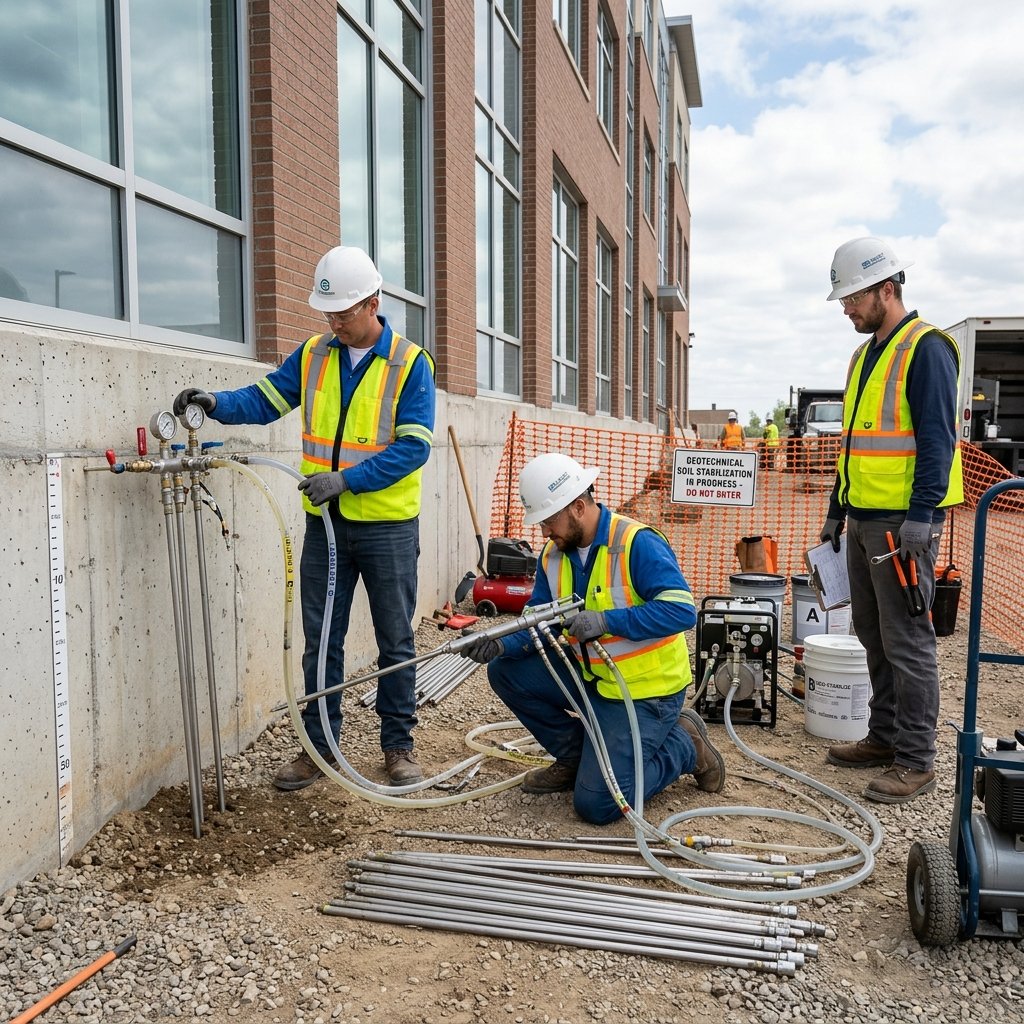
What is soil injection?
Soil injection is an engineering procedure that aims to improve the properties of soil beneath foundations or floors by injecting suitable materials into voids or weak areas. This procedure helps reduce settlement, improve cohesion, and increase the soil’s load-bearing capacity.
When do you need this service?
There are several indicators that show a site needs urgent intervention, and some of the most prominent of these signs are:
Cracks appeared in the walls.
Land subsidence.
Weakness in the soil below the foundations.
The presence of voids or looseness in the soil.
The foundations were affected by water leaks.
A mild or moderate drop needs to be treated before it develops.
Implementation method
At Hamat United, we work according to a clear engineering mechanism that ensures that the problem is addressed safely from its roots:
Site preview
Examine the site and understand the nature of the problem.
Diagnosis
Examination and diagnosis of soil condition or subsidence.
Point identification
Identifying appropriate injection points.
Material selection
The injection material is chosen according to the case.
Field implementation
The injection process is carried out in an organized and safe manner.
Report
Follow up on the results and deliver a brief report to the client.
Materials used
The injection materials are selected based on the site conditions and the type of problem. The materials may vary depending on the soil type, the level of voids, the degree of subsidence, and the objective of the treatment.
Service Features
- Reducing subsidence caused by weak soil.
- Improving soil stability beneath the foundations.
- A suitable solution in certain cases without major structural intervention.
- Organized and safe implementation.
- Suitable for residential and commercial buildings.
- It helps reduce the development of soil-related cracks.
FAQ
Not always. This is determined after examination and testing, as some cases may require additional or different solutions.
Yes, an examination is important to determine the cause of the problem and the appropriate treatment method.
When implemented correctly, the goal is to improve stability and reduce risks, and implementation is carried out in an organized and safe manner.
The time depends on the size of the site, the number of injection points, and the nature of the problem.