
Detecting underground voids and cavities
Advanced solutions for detecting voids and cavities under buildings, roads and structures using non-destructive scanning techniques.
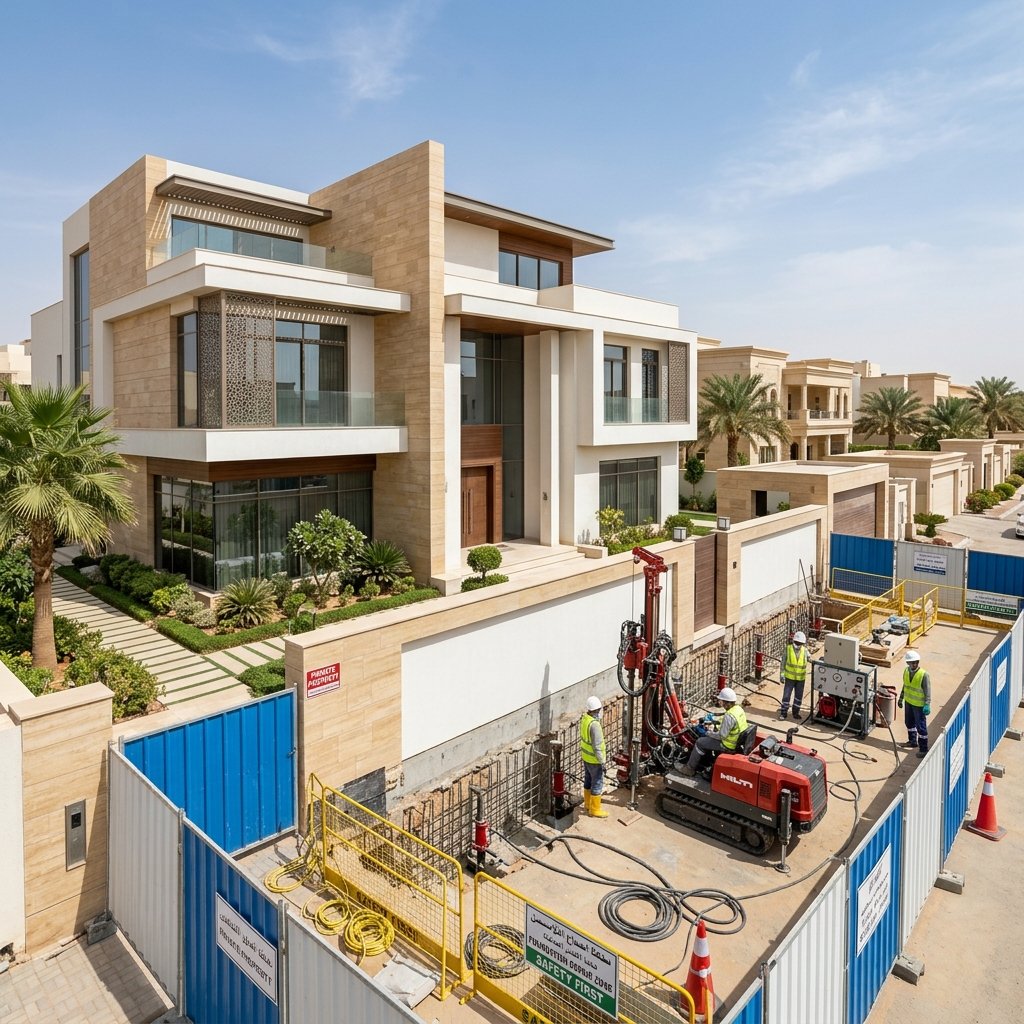
What is the detection of voids and cavities?
Detecting voids and underground cavities is achieved using the latest subsurface inspection and surveying technologies. The goal is to identify hidden cavities and voids that could compromise the safety of buildings, structures, and infrastructure. Ground voids are among the most common causes of subsidence, cracking, and soil instability. Therefore, early detection helps prevent future damage and reduces the costs of repair and geotechnical remediation.
What are ground voids and underground cavities?
Ground voids are empty or weak areas within the soil or rock beneath structures. They can form due to natural factors, water seepage, soil erosion, or previous, poorly planned excavation work.
Ground cavities are larger underground cavities and pockets that can form as a result of continuous erosion or the natural dissolution of certain types of rock (such as limestone) due to groundwater seepage. This causes the soil to lose its natural support.
Signs of voids beneath the building
There are several indicators that show a site needs urgent intervention, and some of the most prominent of these signs are:
The appearance of frequent and unexplained cracks and fissures in the walls.
A sudden drop in the tiles or pavements surrounding the house.
The presence of visible voids or gaps beneath the concrete slabs and floor slabs.
Unevenness in floor and ceiling levels.
Hearing hollow sounds or echoes when normal tapping on floors.
Cracks around the load-bearing columns and main foundations.
Landslides in parts of the courtyards or external roads surrounding the building.
How do Hamat detect voids?
At Hamat United, we work according to a clear engineering mechanism that ensures that the problem is addressed safely from its roots:
Ground-penetrating radar (GPR) scanning
Hamat relies on modern GPR devices to detect voids, cavities and changes below the earth's surface without the need for breaking or drilling.
Field inspection and analysis
Our engineering team analyzes the results of the radar survey and links them to field observations and cracks to arrive at an accurate technical diagnosis.
Preparing technical reports
Issuing professional reports that show the locations of the discovered voids, their approximate depths, and the affected areas, along with an assessment of the degree of risk and the provision of appropriate engineering recommendations for addressing them.
Solutions for addressing the problem after the gaps have been discovered
After identifying the locations of the voids, Hamat offers integrated solutions to address them, including soil injection, filling the voids with specialized construction materials (such as polyurethane resin or cement mortar), and improving the properties of weak soils to increase their load-bearing capacity.
The importance of early detection of voids and cavities
- Protecting buildings and structures from the risks of sudden subsidence.
- Reducing the risk of collapse of floors and suspended concrete slabs.
- Avoid serious and extremely costly structural damage in the future.
- Supporting maintenance, restoration, and geotechnical treatment decisions with clear plans.
- Improving the overall safety levels of the site and facilities.
FAQ
Yes, at Hamat we use advanced non-destructive testing technologies such as Ground Penetrating Radar (GPR) which allows us to image and see voids and cavities under concrete slabs and soil without the need to break tiles or concrete.
Not necessarily. Settlement can result from poor soil properties or inadequate compaction without significant air voids. Therefore, ground-penetrating radar (GPR) testing is essential to pinpoint the exact cause and differentiate between soil weakness and cavities.
Yes, after the survey and analysis process, we issue a comprehensive technical engineering report that includes maps showing the locations of the discovered voids and their approximate depths, along with a proposed action plan and recommendations for treatment.
After discovering and determining the dimensions of the void, we assess the level of risk and propose an appropriate engineering solution to fill this void (such as soil injection with specialized materials) to ensure the full restoration of support to the foundations and prevent future subsidence.