
Soil Injection in Dammam
Engineering treatment of problems of subsidence and soil weakness below the bases, using injection techniques appropriate to the condition of the site and according to engineering standards.
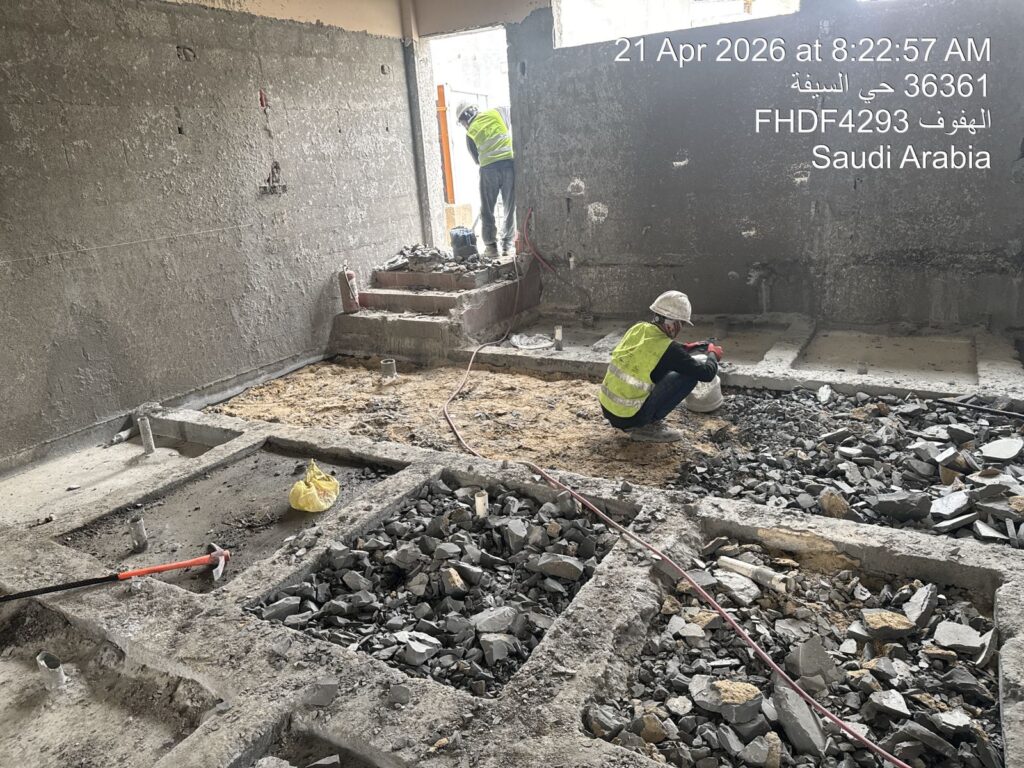
What is Soil Injection?
Soil injection is an engineering procedure that aims to improve soil properties below bases or floors by pumping suitable materials into voids or vulnerable areas. This procedure helps reduce subsidence, improve cohesion, and raise soil load-bearing capacity.
When do you need this service?
- ✓ Cracks in the walls
- ✓ Landing in the floors.
- ✓ Weakness in the soil below the bases.
- ✓ The presence of voids or loosening in the soil.
- ✓ Foundations have been affected by water leaks.
- ✓ A minor or moderate decline that needs to be addressed before it develops.
Delivery mode
Inspecting Sites
Inspect the site and understand the nature of the problem.
Diagnosis
Inspect and diagnose soil condition or subsidence.
Select Points
Identify appropriate injection points.
Article selection
Selection of injection material as the case may be.
Field implementation
Carry out the injection process in an orderly and safe manner.
Report
Follow up on the results and deliver a brief report to the client.
Used Materials
Injection materials are determined by site condition and problem type. Materials may vary depending on the nature of the soil, the level of voids, the degree of subsidence, and the objective of the treatment.
The important thing is that the material is selected based on an engineering diagnosis and not randomly.
Service Features
- ⭐️ Reduce subsidence caused by soil weakness.
- ⭐️ Improve soil stability below bases.
- ⭐️ Appropriate solution in certain cases without significant structural intervention.
- ⭐️ Structured and safe implementation.
- ⭐️ Suitable for residential and commercial buildings.
- ⭐️ Helps reduce the development of soil-related fissures.
<g id="710">F</g>requently <g id="713">A</g>sked <g id="717">Q</g>uestions
Not always. This is determined after inspection and examination, as some cases may need additional or different solutions.
Yes, screening is important to determine the cause of the problem and the appropriate treatment method.
When properly implemented, it is intended to improve stability and reduce risk, and is implemented in an orderly and safe manner.
The time depends on the size of the site, the number of injection points, and the nature of the problem.